HIIT vs Steady State Cardio: Which is More Effective?
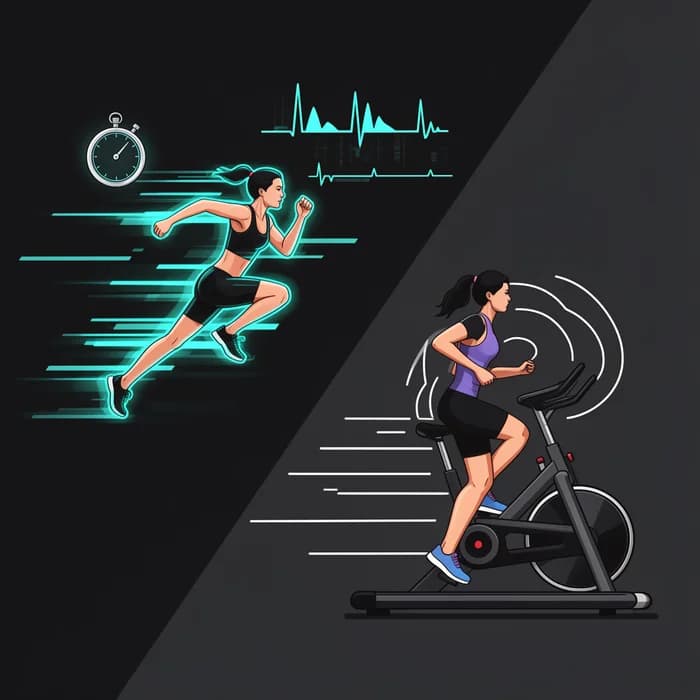
HIIT vs Steady State Cardio: Which is More Effective?
Want to know which method is better for your fat burning and muscle retention? You're in the right place! In this article, we compare HIIT (High Intensity Interval Training) and steady state cardio (LISS - Low Intensity Steady State) to help you find the best method for your goals.
What is Steady State Cardio?
Steady state cardio, also known as LISS cardio, is a low-intensity cardiovascular exercise with consistent movement patterns like running, swimming, or cycling. The training duration should be at least 30 minutes, ideally even 45-60 minutes. The workout is performed at an optimal heart rate of 60-70% of the maximum heart rate (HRmax).
Benefits of Steady State Cardio
- Easy and comfortable: LISS cardio is less strenuous and can be done for a longer period.
- Calorie burning: The longer training duration burns many calories, leading to a caloric deficit.
- Low stress: The low intensity puts less strain on your joints and muscles.
Disadvantages of Steady State Cardio
- Time-consuming: LISS cardio requires more time compared to HIIT.
- Metabolic rate: A caloric deficit can lower the metabolic rate over time.
- Stress responses: Physical activity triggers stress responses, which can increase cortisol levels and water retention.
What is HIIT Cardio?
HIIT cardio stands for High Intensity Interval Training and has gained popularity in recent years. It consists of short, intense bursts of exercise followed by recovery periods. The training duration is typically 15-25 minutes with an optimal heart rate of 80-90% HRmax during the intense phases and 50-60% HRmax during the recovery phases.
Benefits of HIIT Cardio
- Time-saving: HIIT requires less time, making it ideal for people with busy schedules.
- Afterburn effect: The metabolism remains elevated after the workout, leading to prolonged fat burning.
- Growth hormone release: HIIT promotes the release of growth hormones, supporting muscle retention.
Disadvantages of HIIT Cardio
- High intensity: HIIT requires a certain level of endurance and can be challenging for beginners.
- Recovery: The high intensity necessitates adequate recovery time between workouts.
- Injury risk: The high strain increases the risk of injury, especially with improper execution.
Nutrition Tips for Both Methods
Regardless of which method you choose, nutrition plays a crucial role. Before your workout, a fat burner or a carbohydrate-rich meal can help boost your performance. After your workout, it's important to supply your body with protein and fat to support muscle recovery.
Your Path to Success
Both methods have their pros and cons, and it depends on which method better suits your lifestyle and goals. Try both methods and find out which one you feel more comfortable with and achieve better results. Stay committed and work continuously towards your fitness goals – success won't be far away!
Related Articles
Endurance Training and Muscle Building: Improve Both!
Learn how endurance training can support your muscle building. Tips, training plans, and more for your fitness goal.
Benefits and Basics of Endurance Training for Body & Mind
Discover the benefits of regular endurance training for your health. Learn how to train effectively.
Block Training: Effective Way to Boost Performance
Learn how block training improves your fitness and avoids overtraining. Ideal for endurance and strength athletes.