Muscle Building Through Supercompensation - Here's How!
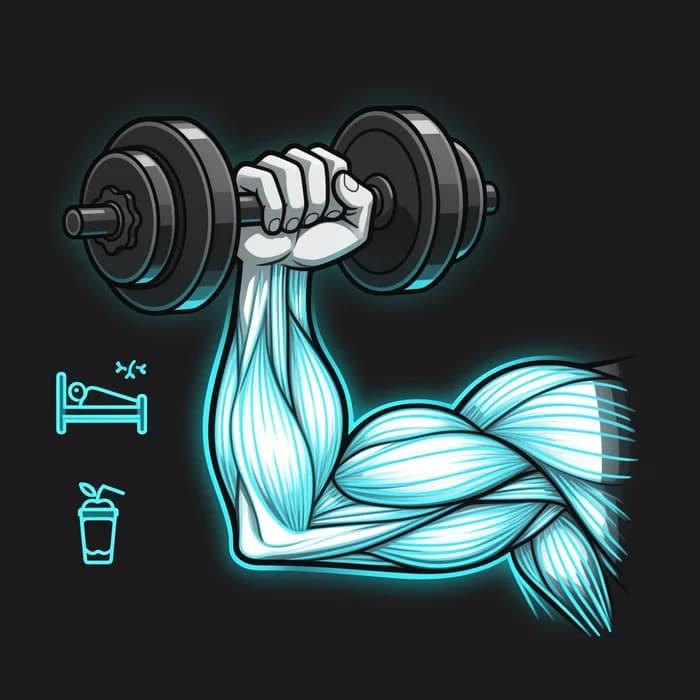
Muscle Building Through Supercompensation - Here's How!
Do you want to maximize your muscle building and are looking for an effective way to achieve your training goals? Then the supercompensation model is exactly what you need. This concept helps you set your training stimuli optimally and make perfect use of recovery phases. This way, you can continuously improve your performance and build muscles efficiently.
Understanding the Supercompensation Model
The supercompensation model is based on the idea that after intense exertion, energy stores and muscular structures regenerate beyond their initial level if sufficient time for recovery is given. This principle was originally demonstrated in laboratory animals and later applied to the human body. It shows how important it is to find the right balance between training stimulus and recovery.
Setting Optimal Training Stimuli
The first step to successful muscle building through supercompensation is setting the right training stimulus. The goal is to induce fatigue that causes muscle trauma. This trauma signals your body to adapt to the stress and become stronger. The intensity of the training stimulus is crucial:
- Too Little Intensity: If the stimulus is too weak, it does not send enough adaptive signals to cause significant adaptation.
- Too Much Intensity: An excessive training stimulus leads to a high recovery demand, which can also impair adaptation.
A good indicator of an optimally set training stimulus is slight muscle soreness or stiffness the next morning, but no later than two days after training.
Recovery and Supercompensation
After setting the right training stimulus, the recovery phase comes into play. This is crucial to achieve the desired adaptations. If you give your body enough time to recover, it will expand its energy reserves and improve muscular structures. Here are some of the positive effects:
- Enlarged Glycogen Stores: More energy for anaerobic activities.
- Increased Number of Mitochondria: Better energy supply to cells.
- Improved Capillarization: More efficient transport of nutrients and oxygen, as well as the removal of metabolic waste products.
The optimal recovery time is at least 48 hours between training stimuli. Current studies show that two training stimuli per week for a muscle group yield the best results. Do not set your next training stimulus too early or too late to fully exploit the potential of supercompensation.
Practical Tips for Everyday Life
To successfully integrate the supercompensation model into your training, consider the following tips:
- Training Intensity: Make sure you are neither training too hard nor too little. Slight muscle soreness is a good indicator of the right intensity.
- Recovery Time: Give your body at least 48 hours to recover between training stimuli. Two training sessions per week for a muscle group are ideal.
- Individual Adaptation: Every body is different, so it may be necessary to individually adjust the training intensity and recovery time.
With these tips and knowledge of the supercompensation model, you are well-equipped to effectively boost your muscle building. Good luck with your training!
Related Articles
Endurance Training and Muscle Building: Improve Both!
Learn how endurance training can support your muscle building. Tips, training plans, and more for your fitness goal.
Benefits and Basics of Endurance Training for Body & Mind
Discover the benefits of regular endurance training for your health. Learn how to train effectively.
Block Training: Effective Way to Boost Performance
Learn how block training improves your fitness and avoids overtraining. Ideal for endurance and strength athletes.