Progressive Muscle Relaxation for Athletes: Enhance Focus and Relaxation
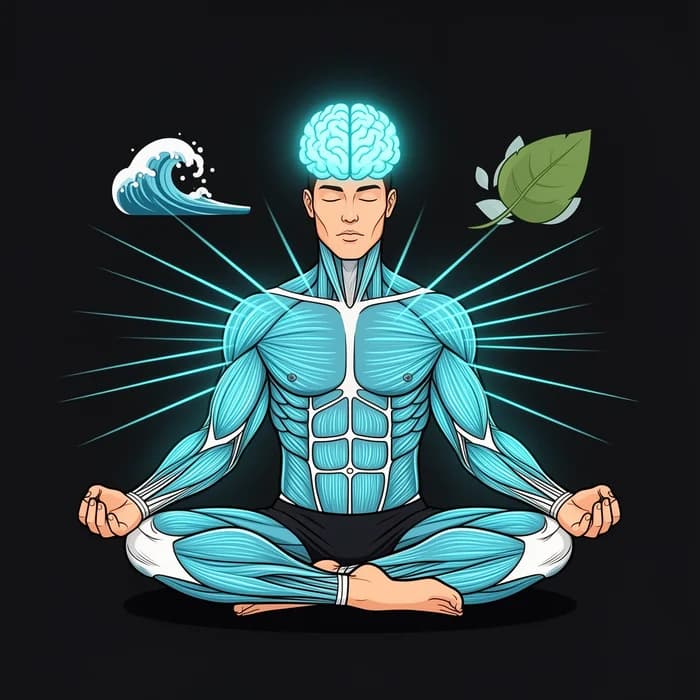
Progressive Muscle Relaxation for Athletes: Enhance Focus and Relaxation
Progressive muscle relaxation is an effective method to release both physical and mental tension. For athletes, it offers numerous benefits that extend far beyond training. In this article, you will learn how to apply this technique to improve your concentration and relaxation, thereby elevating your training to a new level.
What is Progressive Muscle Relaxation?
Progressive muscle relaxation was developed based on a simple yet ingenious principle: by deliberately contracting and then relaxing various muscle groups, deep physical and mental relaxation is achieved. This method is excellent for athletes as it increases awareness of individual muscle groups, thereby improving contraction ability during training.
Benefits of Progressive Muscle Relaxation
Progressive muscle relaxation offers numerous benefits, both short-term and long-term:
- Deep relaxation and well-being: You will immediately feel deeper relaxation and a general sense of well-being.
- Release of tension: Targeted contraction and relaxation can release tensions that often arise from stress and office work.
- Increased awareness of individual muscle groups: This increased awareness helps you target your muscles more effectively during training, promoting muscle growth.
- Reduced risk of injury: Regularly releasing tension reduces the risk of muscular injuries.
- Mental relaxation and improved overall well-being: The method helps reduce stress and enhance general well-being.
The Process of Progressive Muscle Relaxation
To effectively perform progressive muscle relaxation, follow these steps:
- Two rounds per exercise: Each muscle group is contracted and relaxed twice.
- 7 seconds of contraction: Hold the tension for 7 seconds and try to increase it during this time.
- 30-60 seconds of pause: After the contraction, take a 30 to 60-second break to actively enhance relaxation.
- Active relaxation enhancement: During the pause, try to make your muscles even more relaxed and enjoy the feeling of well-being.
- Lying down recommended: The exercises should ideally be performed lying down for maximum relaxation.
Exercises for Progressive Muscle Relaxation
Here are some specific exercises you can incorporate into your training:
- Clench fists: Clench your fists as tightly as possible.
- Spread fingers: Spread your fingers as wide as possible.
- Contract biceps: Tense your biceps as if lifting something heavy.
- Pull shoulder blades back and up: Pull your shoulder blades together and upward as far as possible.
- Contract facial muscles: Make various grimaces to tense the facial muscles.
- Wrinkle nose: Wrinkle your nose as tightly as possible.
- Press lips together: Press your lips firmly together.
- Pull chin towards chest: Pull your chin as tightly as possible towards your chest.
- Push abdomen outward: Push your belly out as far as possible.
- Pull navel inward: Pull your navel firmly towards your spine.
- Tense abdomen: Tense your abdominal muscles as tightly as possible.
- Tense latissimus: Try to press your elbows circularly through the mat to tense the latissimus.
- Tense lower back: Imagine pushing your lower back backward.
- Tense thighs: Tense your thigh muscles as tightly as possible.
- Point toes (calves): Point your feet to activate the calves.
- Pull feet towards body (shin muscles): Pull your feet as tightly as possible towards your body.
- Grip with feet: Try to grip with your feet as if holding something.
- Spread toes: Spread your toes as wide as possible.
- Tense all muscles together: Tense all the muscles in your body simultaneously and cramp up as tightly as possible.
Breath Meditation for Deepening Relaxation
After completing the exercises, it is recommended to follow with a 5- to 10-minute breath meditation to deepen relaxation. Focus on your breath: feel the freshness when inhaling and the staleness when exhaling. If thoughts arise, gently acknowledge them and return to your breathing.
With these techniques, you will not only promote physical and mental relaxation but also make your training more effective. Good luck and stay healthy!
Related Articles
Adaptogens Against Stress: Intake and Effect
Learn how adaptogens like ginseng and ashwagandha can help you reduce stress and enhance your well-being.
Autogenic Training for Sports & Fitness
Discover the benefits of autogenic training for your athletic performance and mental health. Learn more about the techniques and applications.
9 Tips for Better Sleep - Easy Ways to Get Restful Sleep
Discover 9 effective tips for restful sleep. Improve your sleep quality and boost your daily performance.