Fat Loss with If It Fits Your Macros (IIFYM)
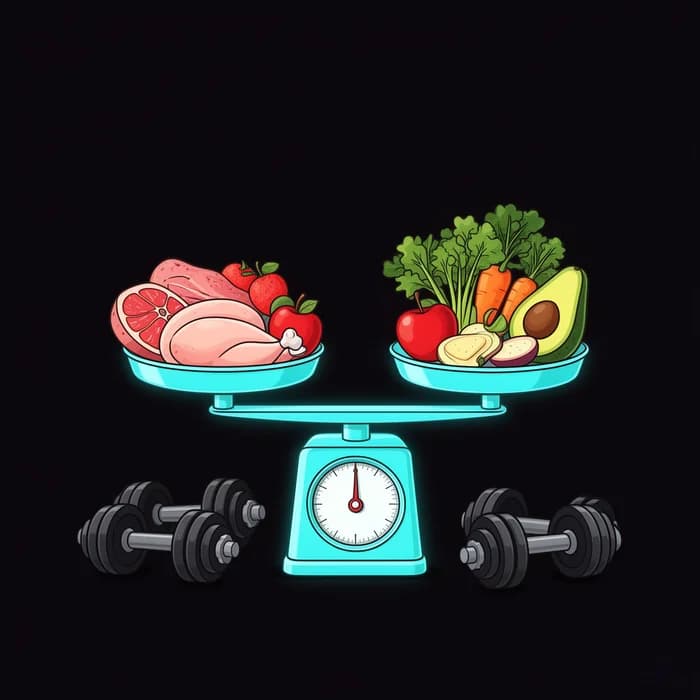
Fat Loss with If It Fits Your Macros (IIFYM)
Do you want to lose weight while still being flexible? Then IIFYM (If It Fits Your Macros) is just right for you. This diet focuses on calorie balance and the proper distribution of macronutrients – proteins, carbohydrates, and fats. This means you can eat anything in principle as long as you hit your macros.
What is IIFYM?
IIFYM stands for "If It Fits Your Macros" and is a flexible diet that focuses on calorie balance and the distribution of macronutrients. There are no strict rules for meal frequency or nutrition timing, making IIFYM particularly simple and flexible. You can enjoy your favorite foods as long as they fit into your daily calorie and macronutrient needs.
Benefits of IIFYM
One of the biggest advantages of IIFYM is its flexibility. You don't have to adhere to strict diet rules or avoid certain foods, which can reduce mental stress and make it easier to stick to the diet. Studies have shown that this flexible approach leads less to overeating and depression compared to stricter diets.
Disadvantages of IIFYM
Despite its flexibility, there are some drawbacks. A major criticism is the possible neglect of micronutrients and fiber. Processed foods, which often contain fewer nutrients, can lead to a deficiency in vitamins and minerals, potentially causing long-term health problems.
The 80/20 Rule
A good approach to leverage the benefits of IIFYM while minimizing its drawbacks is the 80/20 rule. This rule states that 80% of your diet should consist of clean, nutrient-rich foods. The remaining 20% can be chosen as you please. This gives you the flexibility to occasionally eat something less healthy without losing sight of your nutrition goals.
How to Start with IIFYM
To begin with IIFYM, you first need to determine your calorie needs. You can calculate your Basal Metabolic Rate (BMR) and Total Daily Energy Expenditure (TDEE). Then adjust the calories according to your goal – whether you want to lose weight or build muscle.
Step 1: Calculate Your BMR
The BMR is the number of calories your body needs for basic functions. You can calculate the BMR using the Mifflin-St Jeor formula:
- For men: (10 \times weight (kg) + 6.25 \times height (cm) - 5 \times age (years) + 5)
- For women: (10 \times weight (kg) + 6.25 \times height (cm) - 5 \times age (years) - 161)
Step 2: Calculate Your TDEE
To calculate the TDEE, multiply the BMR by an activity factor:
- Sedentary individuals: (BMR \times 1.2)
- Light physical activity: (BMR \times 1.375)
- Moderate physical activity: (BMR \times 1.55)
- High physical activity: (BMR \times 1.725)
Step 3: Adjust Calories to Your Goal
For fat loss, reduce the TDEE by 20%: (TDEE - (TDEE \times 0.2)). For muscle gain, increase the TDEE by 20%: (TDEE + (TDEE \times 0.2)).
Step 4: Determine Macronutrient Distribution
- Protein: 1.5 to 2g per kilogram of body weight
- Fat: 25% of total calories
- Carbohydrates: The rest of the calories
With these steps, you are well prepared to start with IIFYM and achieve your nutrition goals. Good luck and stay motivated – you can do it!
Related Articles
Anabolic Diet for Muscle Building and Fat Loss
Discover the Anabolic Diet: Maximum muscle building while simultaneously burning fat. Learn more about nutrition plans, nutrient distribution, and supplements.
Protein Diet: Fat Loss Without Carbohydrates
Discover the Protein Diet for effective fat loss. Nutrition plan, tips, and more!
Bodybuilding Competition Diet Plan: Muscle Definition & Fat Loss
Optimized diet plan for bodybuilding competitions. Achieve maximum definition and minimize body fat.